Choosing between ground-mounted and rooftop solar depends on available land, energy load, financial models, and state regulations. We break down the key differences to help businesses make the right choice for their renewable energy strategy.
Two Paths to Solar
The decision between ground-mounted and rooftop solar is one of the most fundamental choices in any commercial solar project. While both deliver clean energy and reduce electricity costs, they differ significantly in terms of scale, economics, installation complexity, regulatory requirements, and suitability for different types of consumers.
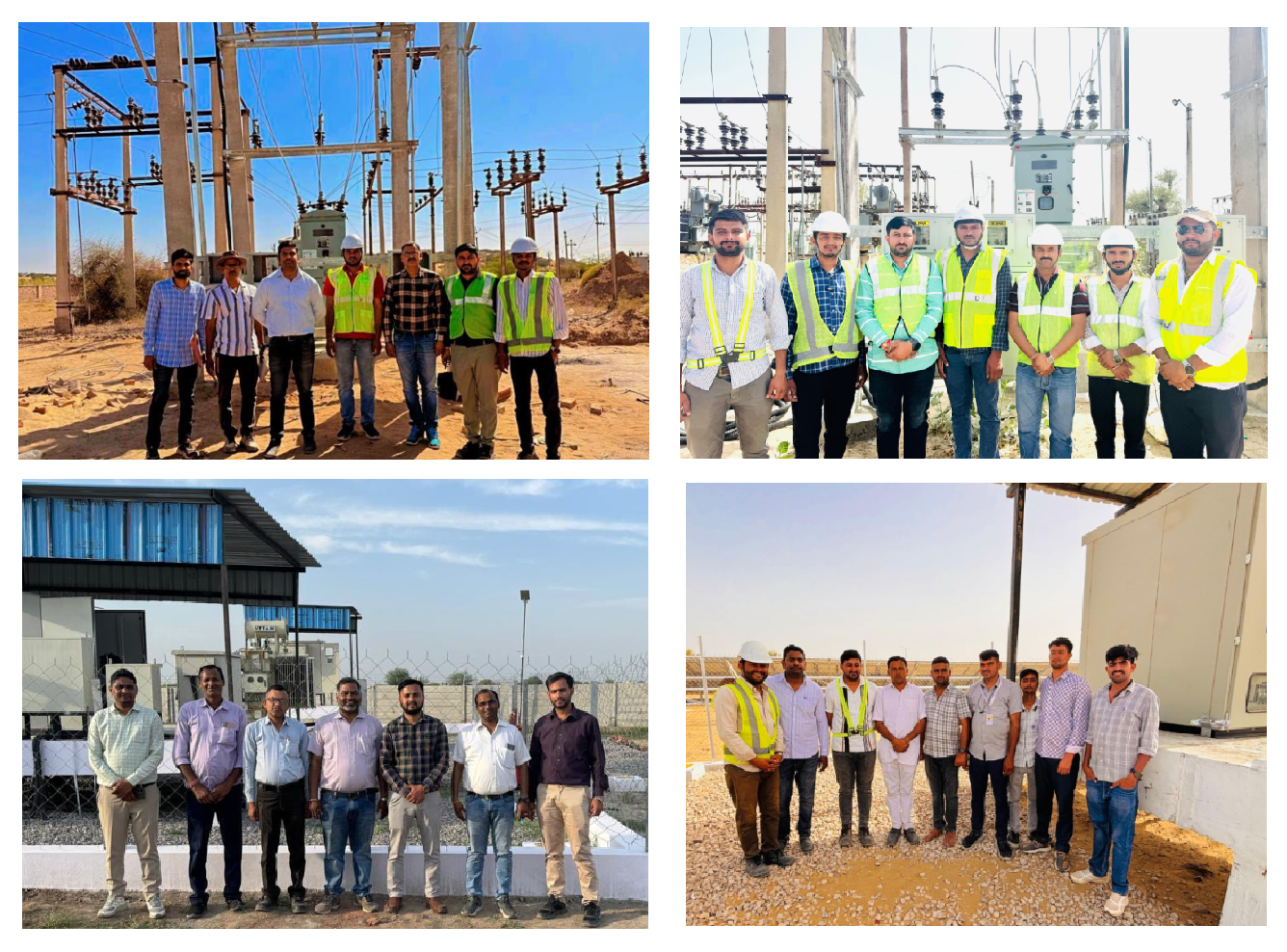
Ground Mount Solar
Best for: Large industrial consumers, IPPs, agricultural land (KUSUM), utilities
- Scale: Typically 1 MW to 500+ MW. Ground-mounted systems can be built at any scale, making them the preferred choice for utility-scale projects.
- Economics: Lower per-MW installed cost due to optimal tilt angle, fewer structural constraints, and better maintenance access.
- Land Requirement: Approximately 4–5 acres per MWp, depending on panel orientation and spacing.
- Performance: Optimal solar yield due to ideal tilt and azimuth positioning, resulting in lower LCOE over the project life.
- Challenges: Land acquisition, grid connectivity, and state-specific regulations.
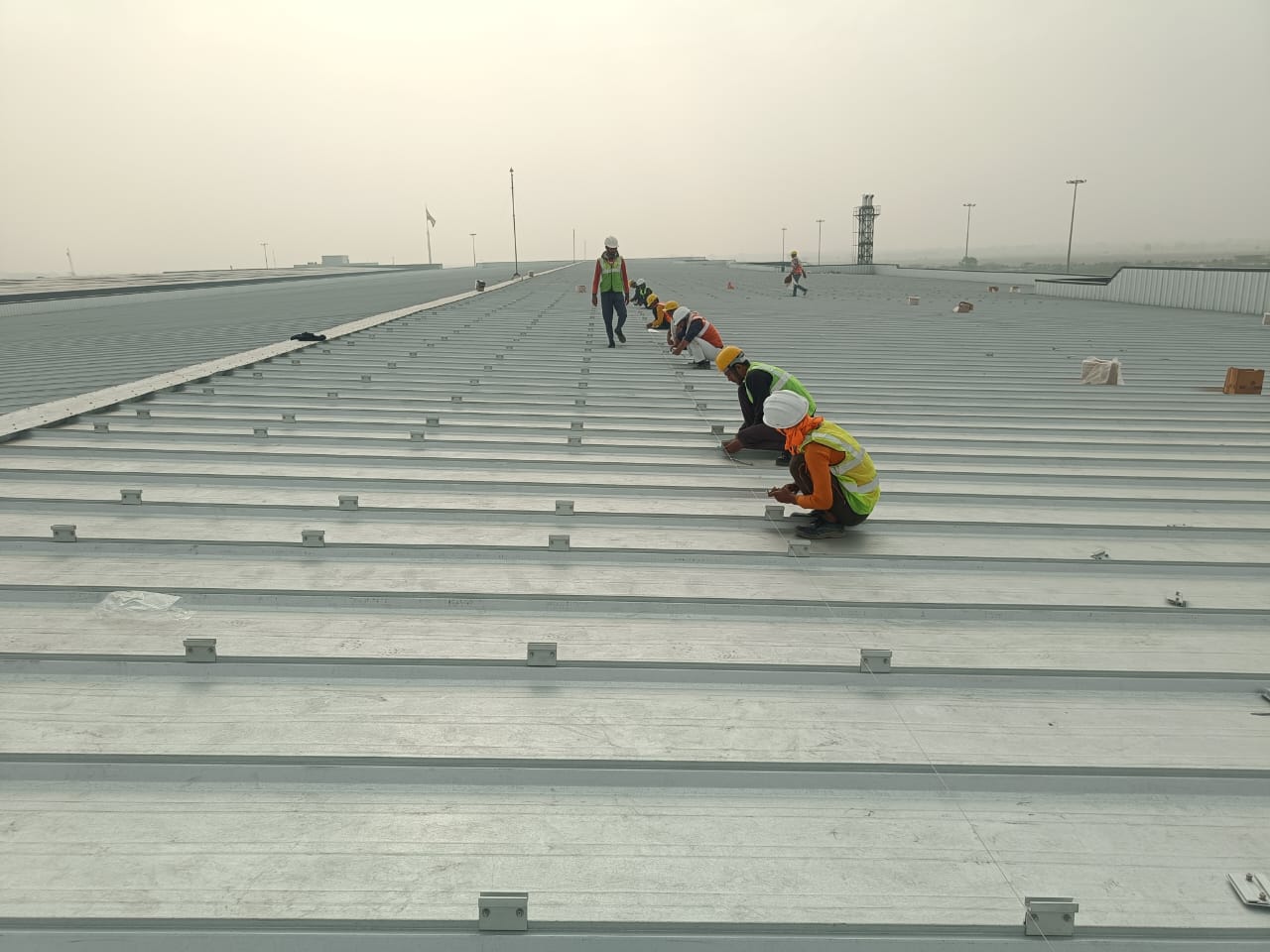
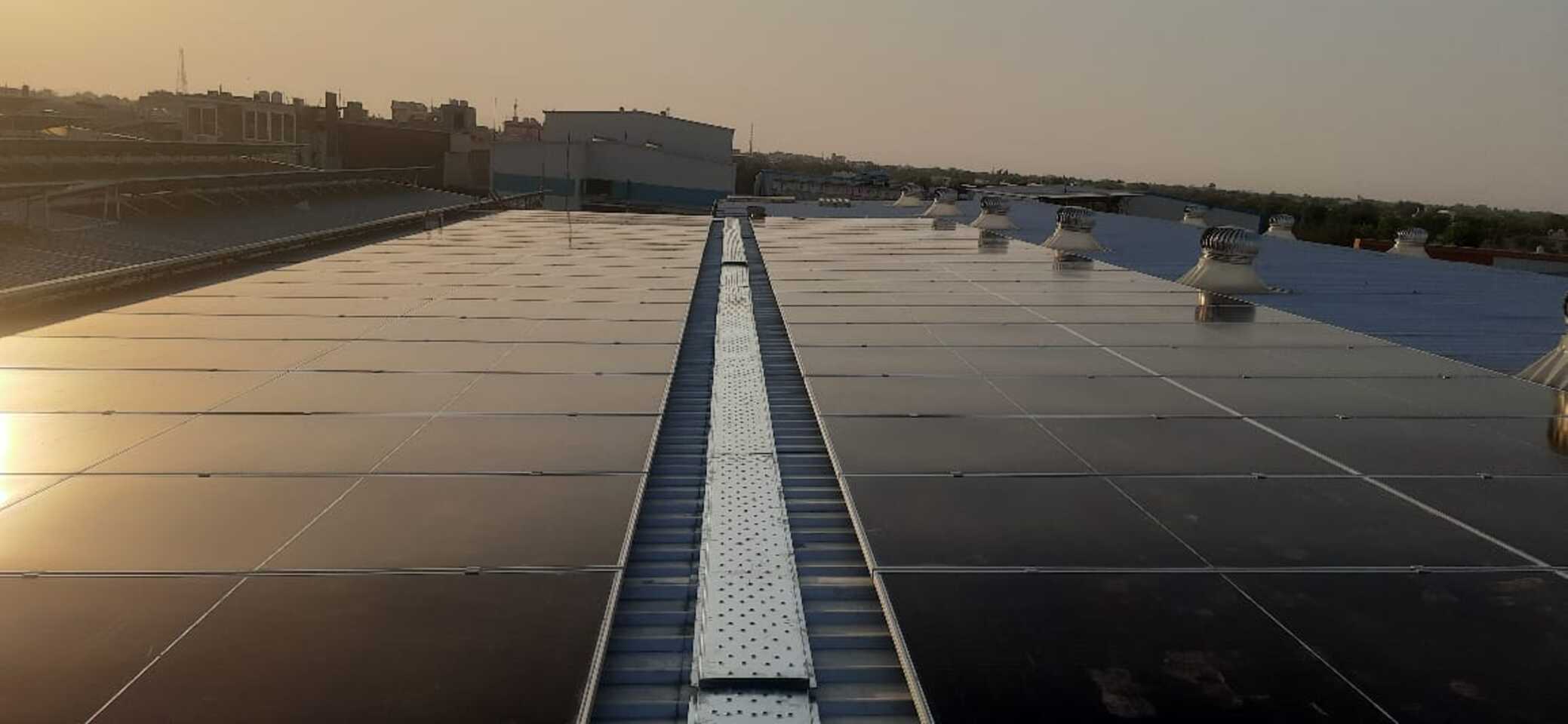
Rooftop Solar
Best for: Commercial buildings, factories, warehouses, hospitals, educational institutions
- Scale: Typically 10 kW to 10 MW, constrained by available rooftop area.
- Economics: Higher per-MW cost than ground mount, but eliminates land acquisition and grid connectivity costs. Net metering enables banking of surplus power.
- Land Requirement: No land needed — the installation is on an existing rooftop.
- Performance: Slightly lower yield than optimally-tilted ground mount due to rooftop orientation constraints, but still highly economic.
- Subsidy Benefits: PM Surya Ghar Yojana provides subsidies for residential rooftop solar. Commercial installations qualify for accelerated depreciation (40% in Year 1).
Decision Framework
Consider the following questions to guide your choice:
- Do you have available land (or access to agricultural land through KUSUM)? → Ground Mount is feasible
- Is your electricity load concentrated at a single facility with a large rooftop? → Rooftop Solar is likely optimal
- Is your load above 1 MW and spread across multiple facilities? → Open Access Solar Park + Rooftop combination may be the best strategy
- Do you want to own the asset or prefer a zero-CAPEX PPA model? → This influences the financial structure, not the technology choice
Ultravibrant's Experience
We have executed both ground mount and rooftop projects across a wide range of scales and geographies. Our integrated capability — covering site assessment, design, procurement, construction, and O&M — means we can recommend and deliver the optimal solution for your specific situation. Contact our advisory team to begin a no-obligation assessment.
Puneet Verma
Senior Energy AnalystSenior leader at Ultravibrant with deep expertise in India's renewable energy sector, bringing years of practical experience in solar EPC, BESS, and project development.